
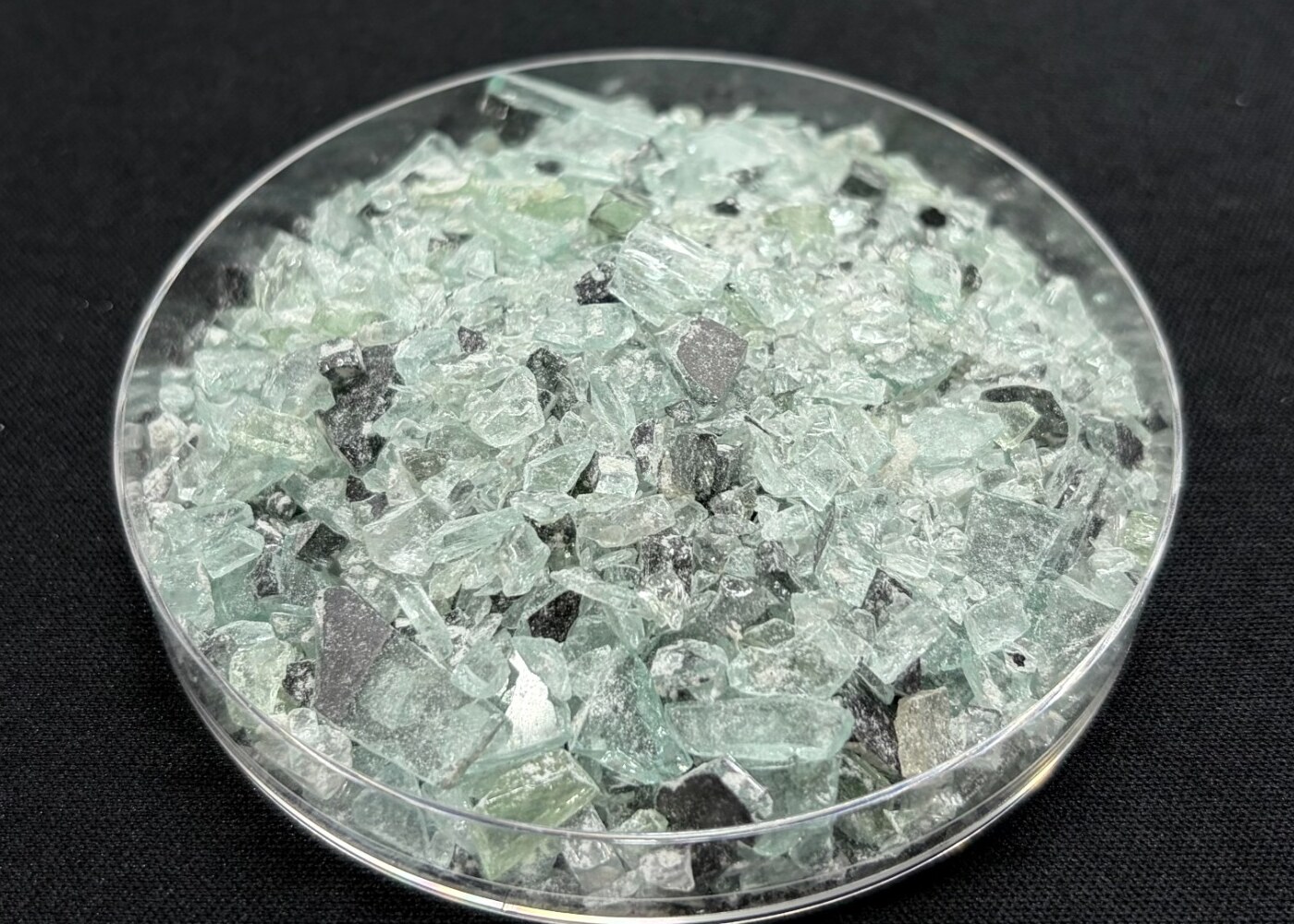
Using waste-glass-derived material in thermoplastics requires control from feedstock composition through to moulded-part evaluation.
Start with cullet quality
Flat glass, container glass and automotive glass differ in composition and contamination. Source, colour, foreign matter and moisture must be checked before glass-wool production.
- Feedstock origin
- Contamination and moisture
- Stable supply volume
Fibreise the glass into wool
The cullet is melted and fibreised into fine, flexible glass wool. Fibre diameter and glass composition influence resin compatibility and final properties.
- Fibre diameter and length
- Glass composition
- Resin compatibility
Improve dispersion through treatment and compounding
Fine fibres can agglomerate. Surface treatment, formulation and compounding conditions are therefore designed for the resin and application before the material is pelletised.
- Agglomeration control
- Pellet supply
- Low-addition comparisons
Verify performance in the actual part
Stiffness, warpage, sink, appearance, flow and cycle-time effects vary with resin, loading, geometry, tooling and moulding conditions. Compare against an unfilled control.
FAQ
Frequently asked questions
01Is glass cullet mixed directly into resin?+
No. It is fibreised into glass wool, surface-treated and compounded into a pelletised masterbatch before being blended with the base resin.
02Can every waste-glass stream be used?+
Suitability depends on composition, contamination and collection condition. Feedstock analysis and trials are required.
03Is it the same as conventional GF compound?+
No. The concept uses fine GW from low addition rates and evaluates reinforcement together with mouldability and surface quality.